P&G’s 7,000 Layoffs: The Fall of Giants, and the Rise of Many Lululemons
At first glance, P&G’s announcement to lay off 7,000 employees might look like a giant losing steam.
But beneath the surface, it’s really about how big brands can no longer serve everyone.
A few months ago, P&G shared its plan:
It will cut 7,000 jobs globally over the next two years, exit some categories and products, and even sell off certain brands.
Once hailed as the “Whampoa Military Academy” of consumer goods, P&G’s growth has been slowing for years.
In FY2021, it grew 7.28%. By FY2024, that number had dropped to just 2%.
In Q3 FY2025, net sales fell 2% year-over-year.
And in Greater China, the situation is worse — sales have declined for four consecutive years, down 9% last year alone.
This only reinforces what I said five years ago:
China won’t give birth to another P&G. It will give rise to many Lululemons.
The Age of Fragmentation
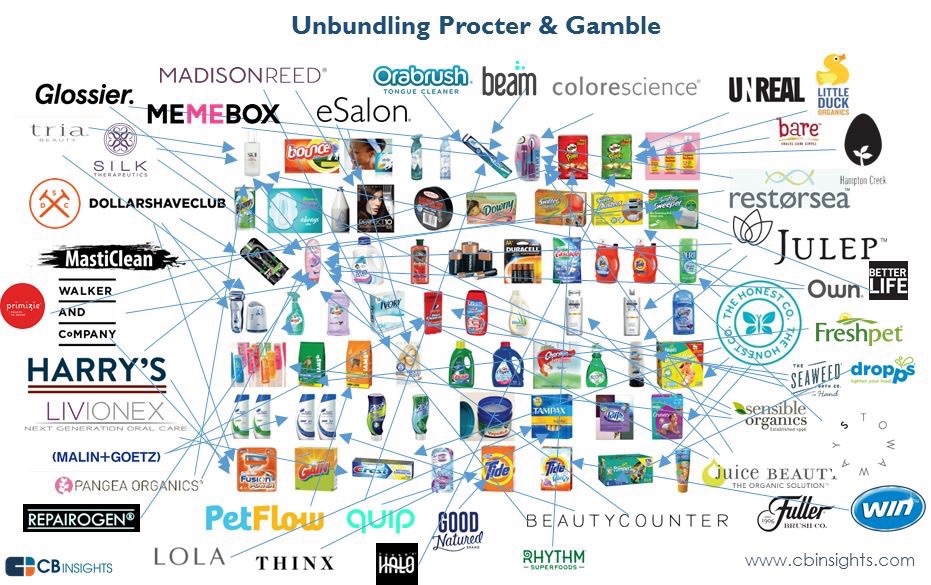
Back in 2014, I saw a chart titled “DTC Brands Eating Away at P&G.”
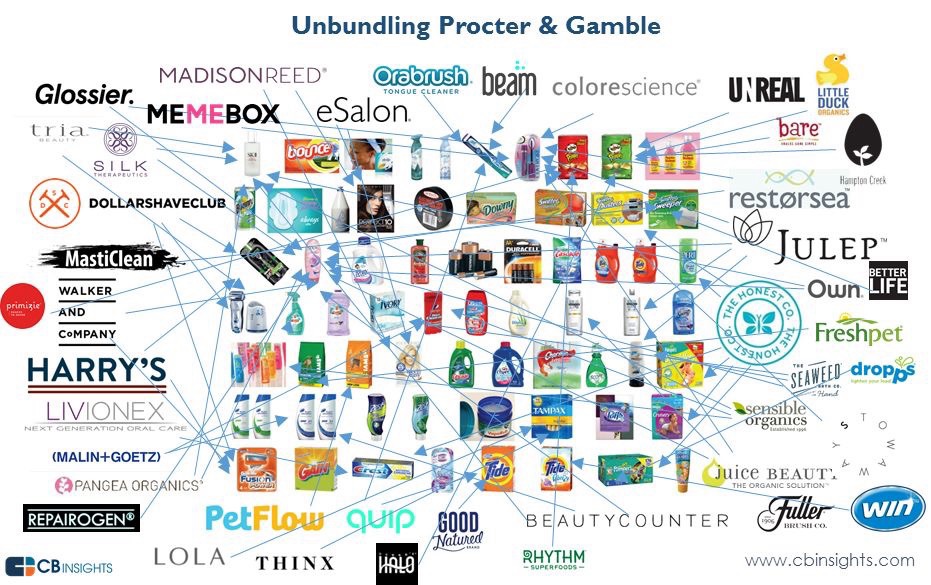
At that time, I was working at Unilever in the U.S., and that chart shook me deeply.
It was clear even then — the future of consumer goods would be fragmented.
And in China, that shift would be even more intense.
When I returned to China in 2017, I founded Digipont Think Tank in 2019, with one mission: to empower great Chinese brands.
Over six years, I’ve worked with dozens of P&G alumni founders — from IRIS to PMPM to Honest Mouth — and I know P&G’s operating logic inside out.
Why Big Brands Can’t Serve Everyone Anymore
P&G’s layoffs might look like decline, but in truth, it’s about a system cracking under its own weight.
As people’s needs become more specific, new brands find room to rise.
We’re moving toward an era of equality — where everyone’s needs matter.
At its peak, P&G had over 300 brands — toothpaste, shampoo, body wash, skincare, you name it.
In China, its market share once reached 47%.
Think of SK-II, Head & Shoulders, Safeguard, Always, Tide — all household names.
But as China’s supply chain matured and national pride grew, local brands started breaking through.
In beauty, while SK-II and Olay’s sales declined, Proya, Kans, Marubi, and Guyu surged ahead.
In personal care, shampoos used to mean Head & Shoulders, Rejoice, Vidal Sassoon, Pantene.
Now, Dafeixin and Mandi are the go-to names for hair growth.
Even toothpaste — once dominated by Crest — now has strong competition from new brands like Sanban and Rabbit Mommy.
The Hidden Logic Behind the Fall
P&G’s thinking was rooted in the book How Brands Grow — the “HBG” logic.
It believed that the bigger your market share, the more likely consumers will choose you again.
So, the playbook was simple: mass penetration through advertising and wide distribution.
In P&G’s world, target audiences were broad abstractions — “women aged 20–45.”
If you tried to target too narrowly, the market would look too small to pass approval.
That made sense in a scarcity era — when consumers saw a few ads on TV, then bought whatever was on the shelf.
Familiar logos meant trust.
P&G and its peers didn’t just sell products — they sold the average dream of the masses.
But today, in an age of abundance, the center no longer holds.
We, the post-90s generation, refuse to be defined by the “average.”
We live by our own subcultures.
Now, we choose brands not for what they sell, but for whether they get us.
The Rise of Niche Empires
That’s why we’re seeing brands emerge from totally different playbooks:
Li Auto, mocked for its oversized TVs and sofas, but really speaking to home-centered families. Yamashita Youmatsu, which isn’t just a bag brand — it’s a tribute to rising middle-aged women. Pop Mart, dismissed as a toy hype machine, yet loved by millions for its emotional resonance.
These brands don’t chase the largest market — they serve specific people deeply.
Depth, not breadth, is their compass.
And when you go deep enough, scale naturally follows — just like Lululemon, which began with yoga girls and grew into a billion-dollar icon.
From Categories to Communities
The old world was category-driven — shampoo, skincare, toothpaste.
The new world is people-driven — tribes of identity and taste.
In this new order, even China’s 1.4 billion population has no true “niche.”
Every community is big enough to build a billion-dollar brand.
Gold shops like Laopu Huangjin and lifestyle icons like Pop Mart are just the beginning.
The next wave of Chinese brands won’t price by cost — but by audience.
And there will be many more to come.
Final Word
I’m Doris Ke, founder of Digipont Think Tank, with 10+ years of experience across China and the U.S., helping brands decode global marketing trends and build the next generation of Chinese giants.
If you want to learn how people-driven brands grow — and how to build your own — follow along.
I’ve spent over six years documenting the world’s best brand strategies and helping companies bring them to life.
Let’s build China’s next great brands, together.
 Landing in China with Doris Ke
Leave a comment